












Russian Federation
Russian Federation
The article analyzes the quality of the obtained sexual products and offspring of Russian sturgeon during the spawning period in the cage complex “Sturgeon farm IP Rogozhkin”. A commodity farm fully provides itself with its own producers to produce offspring from its own planting material and through the acquisition of juveniles, as well as mature females and males on other farms to update the gene pool. It should be noted that the development of sturgeon embryos in a cage complex located in the Kamyzyaksky district of the Astrakhan region sometimes took place at elevated water temperatures, which affected the process of embryogenesis, leading to accelerated hatching of larvae. Under these conditions, it was important to study the morphological parameters of Russian sturgeon larvae, which include body weight, body size, and yolk sac. The study showed that the temperature increase during the spawning campaign in 2018 affected the duration of the embryonic development of the Russian sturgeon compared to 2021. An increase in the number of abnormally developing embryos occurred at the gastrulation and final stages – by 5.1%. In 2019, the rate of embryo development abnormalities was high, which is associated with an increase in water temperature. In 2020, the maximum number of abnormalities in the development of eggs at the crushing stage was 3.5%, and in 2021, the smallest number of abnormally developing embryos was at the gastrulation stage and before hatching – 4.5%.
Russian sturgeon, female, embryo, abnormality, development, cage farming
Introduction
Due to the current situation in the country in recent years, including in the Astrakhan region, technology has been developed to grow sturgeon up to marketable weight and sexual maturity in artificial conditions. This includes using ponds, tanks, and cages with warm waters and natural thermal water sources. The temperate climatic conditions and the availability of water resources such as the Volga River and its delta, as well as artesian springs and ilmen-type reservoirs, make it possible to develop commercial fish farming, including sturgeon farming [1].
With the decrease in the Caspian sturgeon population, it has become necessary to explore alternative areas in agriculture. One of these areas is the formation of productive sturgeon broodstock and the cultivation of commercial fish. Another area is the production of eggs for both reproduction and consumption.
Among the commodity farms in the Astrakhan region, the fish farming company “IP Rogozhkin S. E.” includes the solution of these problems in its production activities. Despite the progress made in the development of commercial sturgeon farming both in our country and abroad, there are still many issues that need scientific solutions. One such issue is the development of optimal feeding regimes for fish. The process of forming the reproductive system of sturgeon, especially in females, largely depends on the quality of food. Along with producing food eggs, commodity farms also aim to form productive broodstock to obtain high-quality reproductive products for subsequent cultivation of offspring to replenish natural populations of these species. At the same time, given the acute shortage of wild sturgeon, this area of aquaculture plays a significant role. The mature portion of both wild and domesticated sturgeon is monitored annually for targeted selection, particularly of female fish. This allows for the reduction of losses among valuable breeders to a minimum.
Issues related to disease prevention in farmed fish arise frequently. There is also a problem with wintering, which leads to losses in both repair-breeding and production stocks [2, 3].
The purpose of the study was to analyze the quality of the obtained sexual products and offspring of the Russian sturgeon during the spawning period in the cage complex.
Materials and methods of research
The entire complex of experimental research and data collection took place in the Astrakhan region at the cages’ sturgeon farm “IP Rogozhkin S. E.”. Materials were gathered during the 2018-2021 fishing seasons. The subjects of the study were sturgeon breeders, specifically, female Russian sturgeons (Acipenser gueldenstaedtii), kept in the cage facility. The farm is located on the Kizan River, about 3.5 kilometers from the village of Verkhny Kalinovsky in Kamyzyaksky district, Astrakhan Region. The river is up to 200 meters wide and up to 12 meters deep in the area where the farm was built.
Sturgeon farm established in 2010, conducts scientific research in the field of sturgeon cage breeding, commercial fish production, sturgeon stocking material, and juvenile release into the natural environment.
The company has 80 cages in its possession: 45 are designed for raising commercial fish of various ages, 20 are for fingerlings, 10 are for keeping small fish, and 5 are quarantine cages. The farm also has its own incubation and tanks facilities, which not only meet the farm's needs for high-quality stocking material for sturgeon but also prepare fish stocking material for other specialized farms.
Cultivation and maintenance of broodstock are carried out in cages with a maximum size of 24 m2 and a water depth of up to two meters. The final stocking density for repair groups can be between 50 and 80 kilograms per square meter, with an average annual growth rate of 1 to 1.2 kilograms for two- to four-year-old fish and 1.5 to 2 kilograms for older age groups. The breeding group of sturgeons should have a stocking density that is two times lower than in commercial aquaculture, with no more than 25 to 40 kilograms per square meter.
Feeding repair groups and breeding fish is done with granulated food from domestic production or similar feeds with granule sizes between 4.5 and 8 mm. Daily feeding rates depend on fish weight and water temperature [4].
Pasty feed consists of minced fish (50%), fish meal (13%), meat and bone meal (7%), blood meal (5%), hydrolyzed yeast (8%), flax and sunflower meal (5%), wheat flour (2%), phosphatides (6%), vegetable oil (2%) and fish oil (1%), as well as a vitamin premix (1%).
The daily ration for younger repair groups should be 20-30% of the fish's weight, while for older ones it should be between 4 and 10%. In winter, the amount should be reduced to 2-4%. Sturgeons should be fed 3-4 times daily in the warm season, and 1-2 times daily during the cold season.
Female and male sturgeon were introduced into spawning conditions against the background of natural water heating to spawning temperatures (12-14 °C). The breeders were injected with surfagon at a dosage of 10-15 micrograms per kilogram of fish body weight. The density of fish in 5 × 5 m mesh cages was no more than 20 kg/m2. Fertilized eggs were incubated in sturgeon incubators with a load of 1.5-2.0 kilograms per insert.
The number of developing eggs was estimated based on the percentage of fertilization, their waste, and typical development during embryogenesis. Fertilization of eggs was determined at the 4-blastomere stage. Before sampling, eggs were thoroughly mixed in an apparatus, and then crushed eggs were separated from non-crushed ones. The percentage of fertilization was calculated based on these results.
Eggs was monitored during the entire development period. After calculating the fertilization percentage, the presence of activated, parthenogenetic, and polyspermic eggs was determined.
During the incubation process, 33 embryos were selected at various stages of development. These samples were then fixed in formalin at a concentration of 4%. After this, the size and weight parameters of the embryos were determined using analytical scales. Additionally, the number of abnormalities was determined by examining the embryos through binoculars, and dead eggs were continuously removed during the incubation process.
The study of embryo abnormalities was conducted using the generally accepted method proposed by T. A. Detlaf and A. S. Ginzburg [5].
The values of the main water parameters (temperature, oxygen) were recorded using a universal measuring instrument Oxygen Polaris (Germany). The parameters of the active reaction of the aqueous medium (pH) were determined using a pH meter. The obtained data were subjected to statistical processing according to G. F. Lakin [6] using the Microsoft Excel. At the same time, elements of statistical analysis were used to determine the average error.
Research results
During the 2018 spawning campaign, the thermal regime of the aquatic environment and oxygen saturation of water were monitored in the cage complex, as shown in Fig. 1.
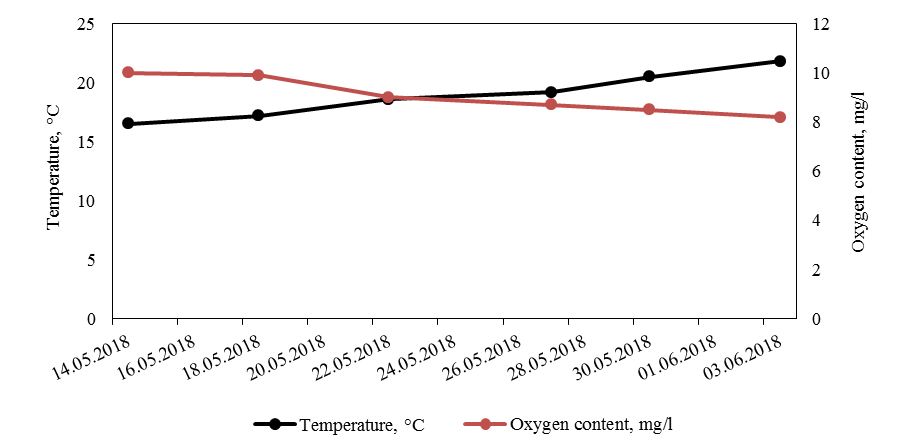
Fig. 1. Dynamics of thermal and oxygen regimes of the aquatic environment during the spawning campaign in 2018
According to the data presented, the temperature and oxygen content during the period of working with breeders and obtaining offspring from them were characterized by optimal values. Thus, the oxygen content in the aquatic environment ranged from 8.0-10.0 mg/l, the temperature in mid-May was 16.5 °C, at the end of the spawning campaign – 21.8 °C.
The temperature conditions of working with breeders and incubation of sturgeon eggs at the enterprise in 2019 had their own peculiarities (Fig. 2).
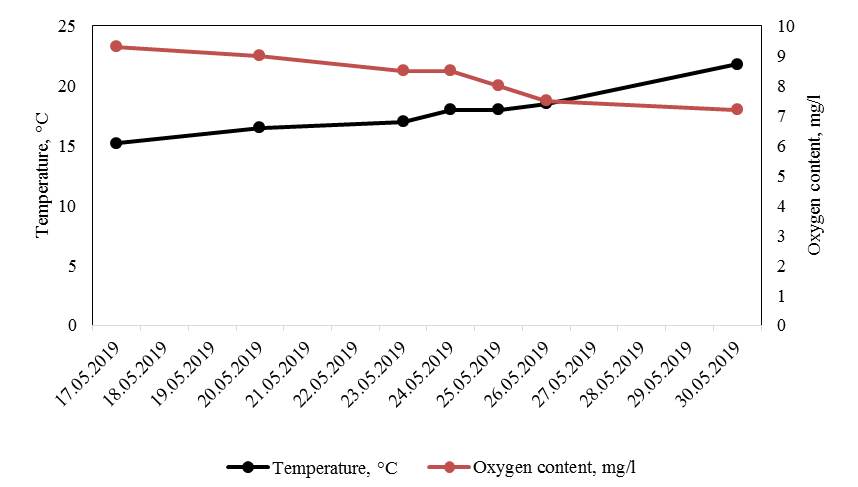
Fig. 2. Dynamics of thermal and oxygen regimes of the aquatic environment during the spawning campaign in 2019
First of all, the early and warm spring of this year contributed to the accelerated heating of the water supply source. As a result, the fertilized eggs were placed in incubation devices at a temperature of 18 °C.
In 2018, the production of sexual products from Russian sturgeon producers began with water heating at 14-16 °C. The water temperature in the water supply source was stable at that time, not exceeding the permissible values with fluctuations of 1.3-1.5 °C (Fig. 3).
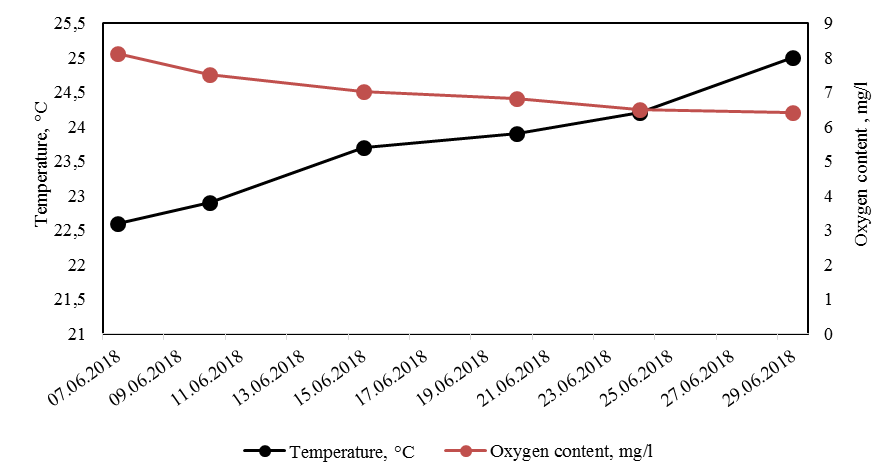
Fig. 3. Dynamics of thermal and oxygen regimes of the aquatic environment during the incubation of eggs
and incubation of pre-larvae in 2018
The duration of embryogenesis of the Russian sturgeon in 2018 was 7 days. Russian sturgeon eggs incubation temperature in 2019 was higher and was in the range of 15.2-21 °C (Fig. 4).

Fig. 4. Dynamics of thermal and oxygen regimes of the aquatic environment during the incubation of eggs
and incubation of pre-larvae in 2019
The temperature increase affected the duration of the embryonic development of the Russian sturgeon, which was 5 days.
The dynamics of changes in temperature and oxygen conditions in 2020-2021 are shown in Fig. 5, 6.

Fig. 5. Dynamics of thermal and oxygen regimes of the aquatic environment in 2020
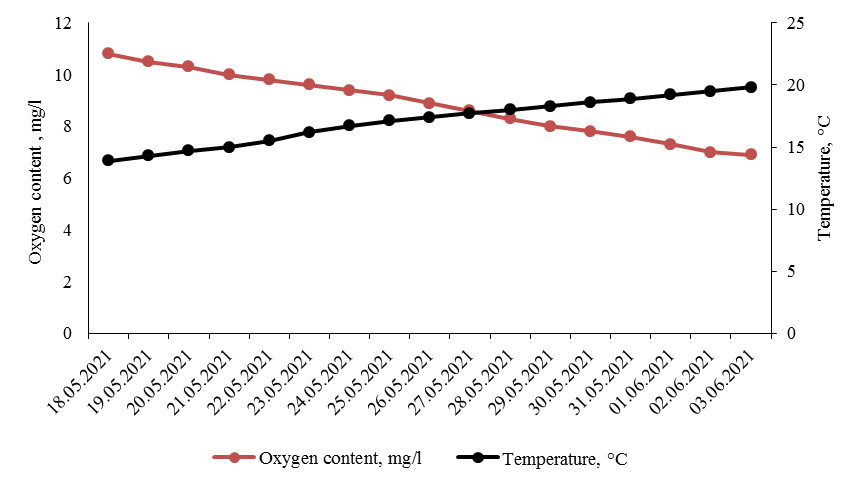
Fig. 6. Dynamics of thermal and oxygen regimes of the aquatic environment in 2021
There were no sharp deviations from the optimal parameters. So, in 2020, the oxygen content in the Kizan River water was in the range of 7.3-10.2 mg/l, the water temperature was 14.2-19.6 ºC. In 2021, the oxygen content varied from 6.9-10.8 mg/L, and the temperature was 13.9-19.8 ºC.
It should be noted that the duration of embryogenesis is determined by the state of the thermal regime of the water in the supply source and depends entirely on the weather conditions of the spring period. In the practice of sturgeon farming, cases of sudden diurnal changes in water temperature are not uncommon.
Table 1 summarizes the statistically processed results of studies of the morphological parameters of unfertilized eggs and embryos of Russian sturgeon at some stages of development in 2018-2021.
Table 1
Size and weight indicators of eggs obtained from Russian sturgeon females
|
Stage |
Size, mm |
Weight, mg |
|||||||
|
Vertical |
Horizontal |
||||||||
|
M ± m |
CV, % |
δ |
M ± m |
CV, % |
δ |
M ± m |
CV, % |
δ |
|
|
2018 |
|||||||||
|
Unfertilized |
3.2 ± 0.03 |
4.9 |
0.2 |
3.0 ± 0.03 |
5.5 |
0.2 |
18.1 ± 0.3 |
7.1 |
1.6 |
|
Fertilized |
3.4 ± 0.03 |
4.3 |
3.2 ± 0.03 |
4.1 |
0.1 |
19.5 ± 0.3 |
6.9 |
1.7 |
|
|
4 blastomeres |
3.5 ± 0.02 |
4.7 |
3.3 ± 0.02 |
3.4 |
19.7 ± 0.2 |
5.8 |
1.4 |
||
|
Gastrulation |
3.6 ± 0.03 |
4.2 |
3.4 ± 0.03 |
5.2 |
0.2 |
20.2 ± 0.1 |
3.4 |
1.6 |
|
|
Final stage |
3.8 ± 0.03 |
4.5 |
3.5 ± 0.01 |
2.1 |
0.1 |
20.9 ± 0.3 |
6.1 |
1.7 |
|
|
2019 |
|||||||||
|
Unfertilized |
3.0 ± 0.05 |
5.5 |
0.1 |
2.8 ± 0.02 |
2.7 |
0.3 |
17.8 ± 0.2 |
6.8 |
2.1 |
|
Fertilized |
3.2 ± 0.02 |
3.8 |
0.2 |
3.0 ± 0.01 |
5.0 |
0.2 |
18.2 ± 0.12 |
4.3 |
1.2 |
|
4 blastomeres |
3.3 ± 0.03 |
5.1 |
0.1 |
3.2 ± 0.03 |
4.4 |
18.8 ± 0.25 |
5.1 |
1.7 |
|
|
Gastrulation |
3.5 ± 0.01 |
6.4 |
0.3 |
3.3 ± 0.02 |
3.5 |
0.1 |
19.3 ± 0.3 |
6.4 |
1.8 |
|
Final stage |
3.7 ± 0.02 |
3.5 |
3.4 ± 0.03 |
2.6 |
0.2 |
20.0 ± 0.2 |
5.3 |
1.5 |
|
|
2020 |
|||||||||
|
Unfertilized |
3.3 ± 0.07 |
3.2 |
0.2 |
3.1 ± 0.04 |
4.5 |
0.1 |
18.4 ± 0.1 |
4.9 |
1.3 |
|
Fertilized |
3.5 ± 0.03 |
2.5 |
0.1 |
3.3 ± 0.02 |
3.7 |
0.3 |
18.8 ± 0.3 |
6.2 |
1.5 |
|
4 blastomeres |
3.6 ± 0.04 |
3.8 |
0.3 |
3.4 ± 0.05 |
4.1 |
0.1 |
19.1 ± 0.2 |
3.9 |
1.2 |
|
Gastrulation |
3.8 ± 0.02 |
5.2 |
0.2 |
3.6 ± 0.01 |
5.0 |
0.2 |
19.6 ± 0.15 |
4.5 |
2.0 |
|
Final stage |
3.9 ± 0.03 |
4.4 |
0.3 |
3.7 ± 0.02 |
3.3 |
0.7 |
20.5 ± 0.3 |
2.8 |
1.8 |
|
2021 |
|||||||||
|
Unfertilized |
2.7 ± 0.02 |
5.6 |
0.1 |
2.5 ± 0.05 |
3.3 |
0.2 |
17.2 ± 0.3 |
5.6 |
0.9 |
|
Fertilized |
2.9 ± 0.01 |
3.0 |
2.7 ± 0.02 |
6.2 |
0.1 |
17.6 ± 0.6 |
4.4 |
1.0 |
|
|
4 blastomeres |
3.0 ± 0.05 |
6.7 |
0.2 |
2.8 ± 0.04 |
2.9 |
0.7 |
17.9 ± 0.5 |
2.2 |
1.3 |
|
Gastrulation |
3.3 ± 0.03 |
4.6 |
0.1 |
3.1 ± 0.03 |
5.3 |
0.5 |
18.3 ± 0.2 |
5.0 |
0.8 |
|
Final stage |
3.4 ± 0.04 |
2.7 |
0.5 |
3.3 ± 0.03 |
3.8 |
0.4 |
19.1 ± 0.4 |
4.7 |
1.2 |
As the fertilized eggs develop, there is a gradual increase in both the mass of developing eggs and the indicators reflecting the horizontal and vertical dimensions. For example, based on statistical data processing, in 2018 the vertical size of eggs increased from 3.2 ± 0.03 to 3.8 ± 0.03 mm, the horizontal size changed from 3.0 ± 0.03 to 3.5 ± 0.01 mm, and the weight increased from 18.1 ± 0.3 to 20.9 ± 0.3 mg.
At the same time, in 2019, the weight of eggs at the considered stages turned out to be lower and, although these differences are insignificant, they are statistically confirmed (0.05 < p < 0.001). It should be noted that the lowest values of the studied indicators were revealed in 2021. This is due to the fact that the female Russian sturgeon used in the spawning campaign of the current year are spawning for the first time. Thus, the average weight of unfertilized eggs was 17.2 ± 0.3 mg, and before the embryos were released from the shells, it was 19.1 ± 0.4 mg.
It was also necessary to find out the quantitative indicators of embryo abnormality. It is known from the literature that the most typical anomalies of developing embryos are violations of the fragmentation process (uneven division of blastomeres) [7, 8]. Atypical crushing entails various disorders of the gastrulation process. A common violation of gastrulation is the inhibition of gastrulation movements. In extreme cases, development stops, gastrulation does not end, the neural plate does not form and the embryo dies. In other cases, despite the pronounced inhibition of the fouling process, which leads to the fact that a large area of yolk-rich vegetative blastomeres remains exposed, development continues. Neurulation in such embryos proceeds atypically, a shortened and usually curved neural plate is laid. Another characteristic disorder of gastrulation is the underdevelopment of the roof of the primary intestine. In this case, the process of fouling of vegetative blastomeres may be normal, but the structure of the embryo at the end of gastrulation turns out to be defective, namely, the dark protrusion of the primary intestine visible on the dorsal side is much shorter than normal, and sometimes it is completely absent. In such embryos, a shortened neural plate is laid, a large or smaller part of the brain region of the neural plate is missing, or its entire expanded head region is missing. Sometimes, only a small, short and narrow neural plate is laid in front of the slit-like blastopore, and in cases where there was no dark dorsal protrusion at all, no neural plate is formed. As a result of the underdevelopment of the roof of the primary intestine and the neural plate, the anterior parts of the embryo body are underdeveloped or completely absent in the subsequent stages [5, 7].
According to the data obtained, the maximum number of abnormally developing embryos in 2018 was at stage 14 (gastrulation) and the final stage. Thus, the value of this indicator was 9.5 and 8.6%, respectively. A significant number of morphological pathologies were noted at the crushing stage – 7.2%. According to the data obtained in 2019, the number of atypically developing Russian sturgeon embryos in conditions of natural warming of water at certain stages of development significantly dominates, in comparison with those in 2018.
Fig. 7, in the form of a histogram, shows the number of abnormally developing embryos at different stages of development in 2018-2021.

Fig. 7. Quantitative indicators of abnormally developing Russian sturgeon embryos in 2018-2021
According to the results obtained, the largest number of abnormally developing embryos at all the studied stages (crushing, gastrulation, and the final stage) was recorded in 2021 – 8.7, 11.3 and 9%, respectively. The lowest values of embryo abnormality were recorded in 2020. In the biotechnical cycle of artificial breeding of sturgeons, it is considered a rather difficult stage to obtain viable, morphologically and physiologically complete, actively feeding larvae for their subsequent rearing to the juvenile stage in pools [8, 9]. It should be noted that the development of embryos in 2019 took place at elevated water temperatures, which affected the process of embryogenesis, resulting in accelerated hatching of the larvae. It was important to study the morphological parameters of the Russian sturgeon larvae, in particular, the total length, postanal position, size of the yolk sac and body weight indicators [9, 10]. The results are presented in Table 2.
Table 2
Size and weight indicators of pre-larvae obtained from Russian sturgeon breeders in 2018-2021
|
Indicators |
Size, mm |
Weight, mg |
||
|
Total length, mm |
From the edge of the yolk sac to the chord, mm |
Postanal |
||
|
2018 |
||||
|
After hatching |
||||
|
М ± m |
11.9 ± 0.06 |
3.2 ± 0.06 |
3.0 ± 0.05 |
23.5 ± 0.08 |
|
CV, % |
3.2 |
6.7 |
7.3 |
5.5 |
|
During the transfer to active feeding |
||||
|
М ± m |
15.6 ± 0.15 |
1.9 ± 0.1 |
3.7 ± 0.08 |
35.3 ± 0.12 |
|
CV, % |
3.0 |
9.7 |
5.1 |
8.1 |
|
2019 |
||||
|
After hatching |
||||
|
М ± m |
11.3 ± 0.02 |
2.9 ± 0.04 |
2.7 ± 0.03 |
22.0 ± 0.1 |
|
CV% |
7.3 |
5.2 |
4.4 |
6.2 |
|
During the transfer to active feeding |
||||
|
М ± m |
14.8 ± 0.3 |
1.5 ± 0.15 |
3.3 ± 0.12 |
34.1 ± 0.3 |
|
CV, % |
5.5 |
3.1 |
6.0 |
4.3 |
Ending of Table 2
|
Indicators |
Size, mm |
Weight, mg |
||
|
Total length, mm |
From the edge of the yolk sac to the chord, mm |
Postanal |
||
|
2020 |
||||
|
After hatching |
||||
|
М ± m |
12.9 ± 0.05 |
3.1 ± 0.02 |
2.9 ± 0.04 |
23.2 ± 0.4 |
|
CV, % |
4.5 |
7.5 |
3.5 |
5.7 |
|
During the transfer to active feeding |
||||
|
М ± m |
16.4 ± 0.09 |
1.6 ± 0.1 |
3.5 ± 0.15 |
36.1 ± 0.17 |
|
CV, % |
2.7 |
4.0 |
5.4 |
4.9 |
|
2021 |
||||
|
After hatching |
||||
|
М ± m |
10.1 ± 0.04 |
2.8 ± 0.02 |
2.5 ± 0.07 |
21.5 ± 0.08 |
|
CV, % |
4.2 |
6.7 |
2.1 |
5.5 |
|
During the transfer to active feeding |
||||
|
М ± m |
13.9 ± 0.5 |
1.4 ± 0.13 |
3.0 ± 0.3 |
33.8 ± 0.1 |
|
CV, % |
8.1 |
5.3 |
4.0 |
3.3 |
According to the tabular data, the larvae obtained in 2018 turned out to be larger. Thus, the average body length of larvae during the growing period reached 15.6 ± 0.15 mm, in 2019 – 14.8 ± 0.3 mm. The differences were confirmed statistically (p < 0.01). The same feature was noted in the study of the body weight of larvae during the transition to active nutrition. The average value of this indicator in the larvae of the 2018 batch was 35.3 ± 0.12 mg, in 2019 it was 34.1 ± 0.3 mg. This is most likely due to the longer transfer time of the larvae in 2018 to exogenous nutrition.
The lowest values of the size and mass indices of the larvae after hatching and during the transition to active nutrition were noted in 2021. This is also due to the fact that these offspring were obtained from the first-time spawning females of the Russian sturgeon. The average weight of the eggs at the hatching stage was 21.5 ± 0.08 mg, and when switching to external nutrition, it was 33.8 ± 0.1 mg.
It is known that in the operating fish farms of the Lower Volga, as a rule, significant losses of offspring occur at the stages of embryonic and early postembryonic development. Along with the critical (sensitive) stages of development of embryos and larvae, unfavorable factors of the aquatic environment have a significant impact on their quality and survival. The running water supply of incubators and swimming pools is not able to ensure the stability of physic-chemical parameters and water quality. Naturally, in conditions of an acute shortage of breeders, excessive losses of developing caviar and larvae of sturgeon fish are unacceptable [9, 11, 12].
Abnormally developing individuals were selected throughout their stay in the pools, followed by their quantitative calculation as a percentage. Fig. 8 shows data reflecting the presence of anomalies in the development of Russian sturgeon larvae in 2018-2021.
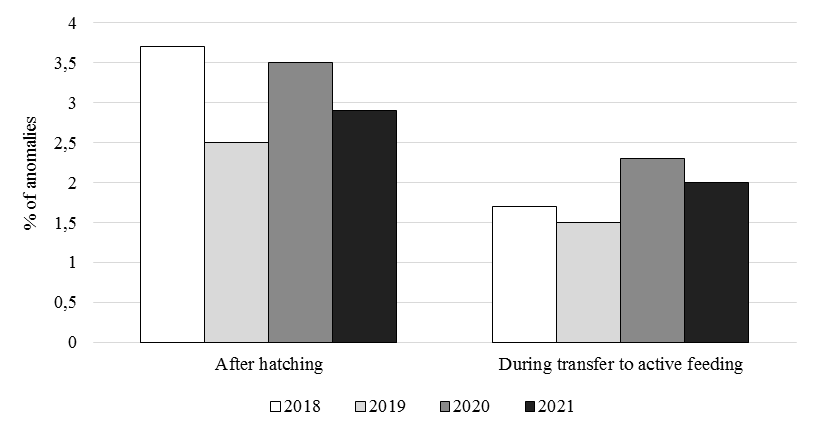
Fig. 8. The number of abnormally developing Russian sturgeon larvae during the transition to active feeding in 2018-2021
It should be noted that the maximum of anomalies in all the studied years was recorded in one-day-old larvae. So, in 2018 it was 5.7%, in 2019 – 6.5%, in 2020 – 4,5%, 2021 – 6,8%. With age, abnormal individuals were eliminated, and at the stage of ejection of pigment plugs, these indicators were within the normal range.
In 2020, the lowest number of abnormal eggs was recorded at the hatching stage – 4.5%. In 2021, the maximum values of this indicator were recorded in pre-larvae after hatching and during the transition to active nutrition – 6.8 and 4.4%, respectively.
Among the disorders in the development of fetuses, the most typical anomalies are the isolation of the head and a shortened tail, the absence of anterior parts of the head, as well as cases of asymmetric development – curvature of the spine, folds and flaws in the fin margin. At the same time, previously performed studies have established that the main cause of the anomalies are unfavorable environmental conditions.
Conclusion
In cage fish farming, the instability of the temperature of the aquatic environment has a negative impact on the course of morphological forming processes of sturgeon fish. Therefore, it is necessary to carry out careful quality control of breeders and offspring of sturgeon fish, taking into account the number of abnormally developing individuals under natural temperature conditions. The cage site “Sturgeon farm IP Rogozhkin” is located on the Kizan River, in the area of the well-established coastline. The line of cages is installed in a deep-water area where the current velocity reaches 0.2-0.5 m/s. All hydrochemical parameters of the environment in the cage area correspond to the regulatory indicators for cage fish farming. The dissolved oxygen content in water does not fall below 6 mg/l, pH – 7.8, nitrites – 0.025 micrograms/l, nitrates – 1.6 micrograms/l, sulfates – 142.8 mg/l. The thermal regime of the reservoir in the area of the cage installation during the spawning campaign, as well as during the incubation period, is characterized as satisfactory. There was no heating of the water to critical values. The production of sexual products and subsequent incubation of eggs took place at temperatures from 14-22 ºC.
The use of spawning Russian sturgeon females for the first time also affected the offspring rates. Thus, the average weight of eggs at the final stage of embryogenesis decreased from 20.0-20.9 mg to 19.1 mg. The lowest percentage of abnormally developing embryos was typical for 2020 – less than 8% during crushing and gastrulation and less than 5% at the final stage, in 2021 the highest percentage of anomalies was registered for embryos at the gastrulation stage – 11.3%. The year 2021 was also characterized by a decrease in the average weight of pre-larvae, compared with other years – to 21.5 mg after hatching and 33.8 mg during the transition to external nutrition. The maximum percentage of abnormally developing individuals was observed in one-day-old larvae: in 2018 – 5.7%, in 2019 – 6.5%, in 2020 – 4.5%, in 2020 – 6.8%.
1. Vasilyeva L. M., Sudakova N. V., Pishchenko E. V. Commercial sturgeon breeding in Russia (review). Fish farming and fisheries, 2024, vol. 18, no. 12 (227), pp. 834-849. DOI:https://doi.org/10.33920/sel-09-2412-01.
2. Astafieva S. S., Vasilyeva T. V., Fedoseeva E. A., Abdusamadov A. S. The state of artificial reproduction of sturgeon in the West Caspian region and proposals for its development. Actual problems of modern science, 2010, no. 6, pp. 48-54.
3. Chebanov M. S., Galich E. V. Brood herds of sturgeon fish: optimization of year-round reproduction and production of food caviar in intensive aquaculture. Aquatic bioresources and aquaculture of the South of Russia: Proceedings of the All-Russian scientific and practical conference dedicated to the 20th anniversary of the opening of the training course “Aquatic bioresources and aquaculture” at Kuban State University (Krasnodar, May 17-19, 2018). Krasnodar, Kuban State University, 2018. Pp. 419-423.
4. Bronzi P., Rosental H. Present and future sturgeon and caviar production and marketing: A global market overview. Journal of Applied Ichthyology, 2014, vol. 30, pp. 1536-1546.
5. Detlaf T. A., Ginzburg A. S. The embryonic development of sturgeon fish (sturgeon, sturgeon and beluga) in connection with their breeding. Moscow, USSR Academy of Sciences, 1954. 216 p.
6. Lakin G. F. Biometrics. Moscow, Vysshaya shkola Publ., 1990. 352 p.
7. Ilyushina P. S., Loginov L. S. Morphometric variability of juvenile Russian sturgeon under intensive cultivation in small ponds. Fisheries, 2024, no. 6, pp. 70-76. DOI:https://doi.org/10.36038/0131-6184-2024-6-70-76.
8. Kozlova N. V., Nikitin F. I., Makeeva O. V., Ponomarev R. A. Physiological research of young Russian sturgeons in modern ecological conditions of the Caspian Sea. Rybovodstvo i rybnoe hozjajstvo (Fish Breeding and Fisheries), 2024, pp. 635-647. DOI:https://doi.org/10.33920/sel-09-2409-04.
9. Korneev A., Luzhnyak V. Biological peculiarities of the industrially bred juvenile Russian sturgeon Acipenser gueldenstaedtii (Acipenseridae, Acipenseriformes) in the Don. Journal of Ichthyology, 2012, no. 52, pp. 268-276. DOI:https://doi.org/10.1134/S0032945212020075.
10. Brigida A. V., Elizarova A. S. Analysis of exterior indices of Russian sturgeon juveniles grown at sturgeon fish factories of the Astrakhan region. Veterinaria i kormlenie, 2023, no. 1, pp. 10-13. DOI:https://doi.org/10.30917/ATT-VK-1814-9588-2023-1-2.
11. Tunçelli G., Momin M., Memiş D. Impact of early and late maturation on the reproductive performance broodstocks of Russian sturgeon (Acipenser gueldenstaedtii). Aquaculture International, 2025, no. 33 (322). Available at: https://link.springer.com/article/10.1007/s10499-025-02016-6 (accessed: 12.03.2025).
12. Borodkina D. Y., Smirnova N. V. Reproductive parameters of Russian sturgeon in aquaculture. Actual problems of biodiversity and biotechnology: Proceedings of the III International Scientific and Practical Conference (Astrakhan, March 15, 2024). Astrakhan, Astrakhan State University named after V. N. Tatishchev, 2024. Pp. 173-175.